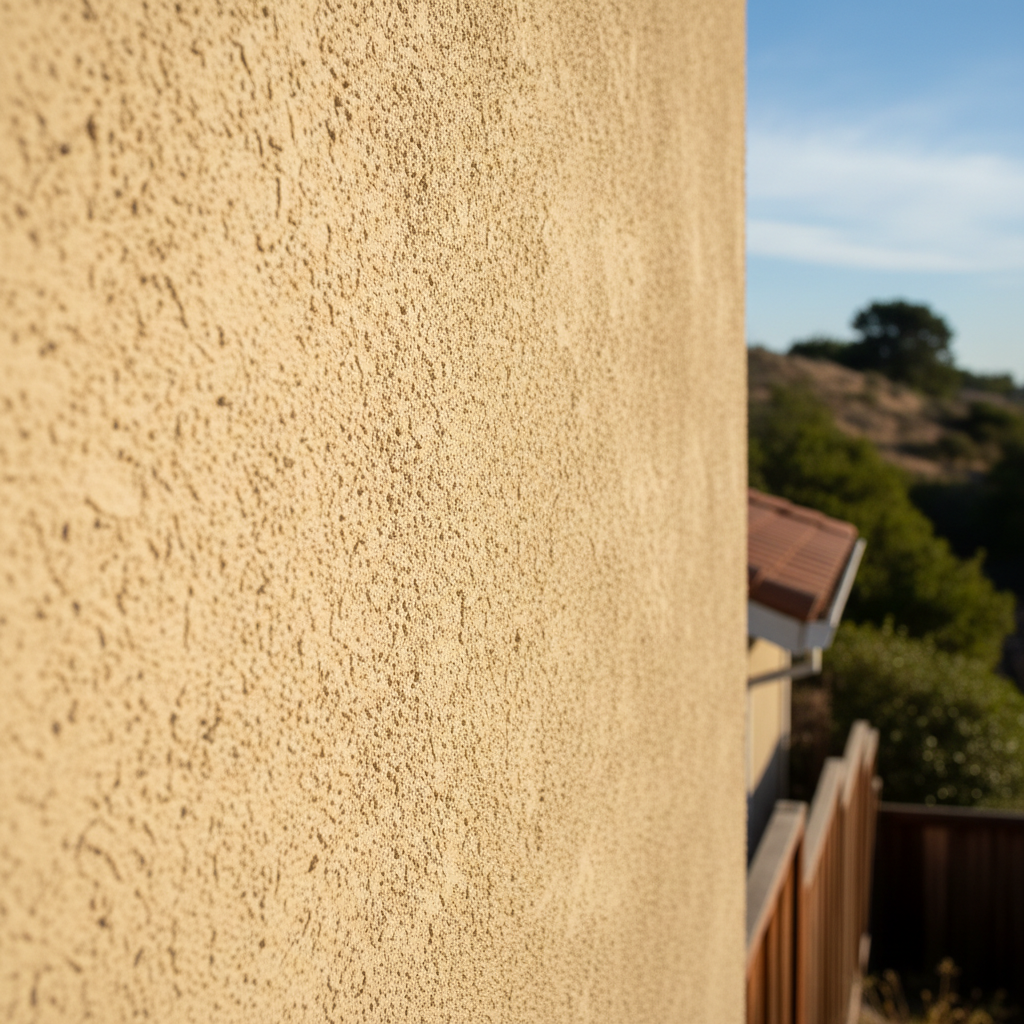
Your stucco exterior takes a real beating from the fog rolling off the Bay and up into Crestmoor Canyon. If you own a house here in San Bruno, ignoring your walls until a chunk falls off is an expensive mistake. You do not need a degree in construction to keep an eye on your siding, but you do need to know what you are looking at and when to step back.
Before You Start Looking
Grab a notebook and a flashlight, but leave the heavy tools in the garage. Take a slow walk around your entire foundation. Stucco hates trapped moisture, and our local microclimates mean some walls stay damp longer than others, especially on the north side of the house where the sun barely hits during winter. Check your sprinklers, too. If an automatic head has been spraying a constant mist against your stucco wall for the last six months, you are inviting damage before you even begin your inspection.
What You Can Do Yourself
Start from the ground and look closely at the texture. Hairline cracks happen as houses settle, and most of them are not the end of the world. But if you can slide a credit card into a crack, that is past normal settling.
- Walk the perimeter and note every single crack wider than a sixteenth of an inch.
- Check where your stucco meets the concrete foundation. If the weep screed is buried under dirt or flower beds, moisture has nowhere to escape.
- Look around every window frame and door trim. Caulking fails fast in our climate swings.
- Press firmly on any areas that look discolored or dark after a dry spell. If it feels spongy, stop right there.
When to Call a Professional
There is a hard line between routine homeowner maintenance and opening up a structural can of worms. If you tap on the stucco and it sounds hollow, water has likely gotten behind the scratch coat and rotted the wire lath or framing studs. That is not a weekend DIY patch job. Coastal Stucco Co sees this all the time on older homes near Skyline Boulevard where wind-driven moisture finds every tiny weakness. If you spot efflorescence, that crusty white powdery stuff pushing through the finish, it means water is actively migrating through your wall and dissolving salts along the way. That is your cue to bring in thermal imaging gear and moisture meters.
After Your Inspection
Once you have mapped out what is going on, prioritize your fixes. Small hairline cracks can be sealed with a quality elastomeric patch if you catch them during dry weather. Anything involving soft spots, bulging walls, or rust stains bleeding through the finish needs a trained eye. Taking care of small issues now keeps your exterior solid and prevents a minor repair from turning into a major wall replacement later down the road.