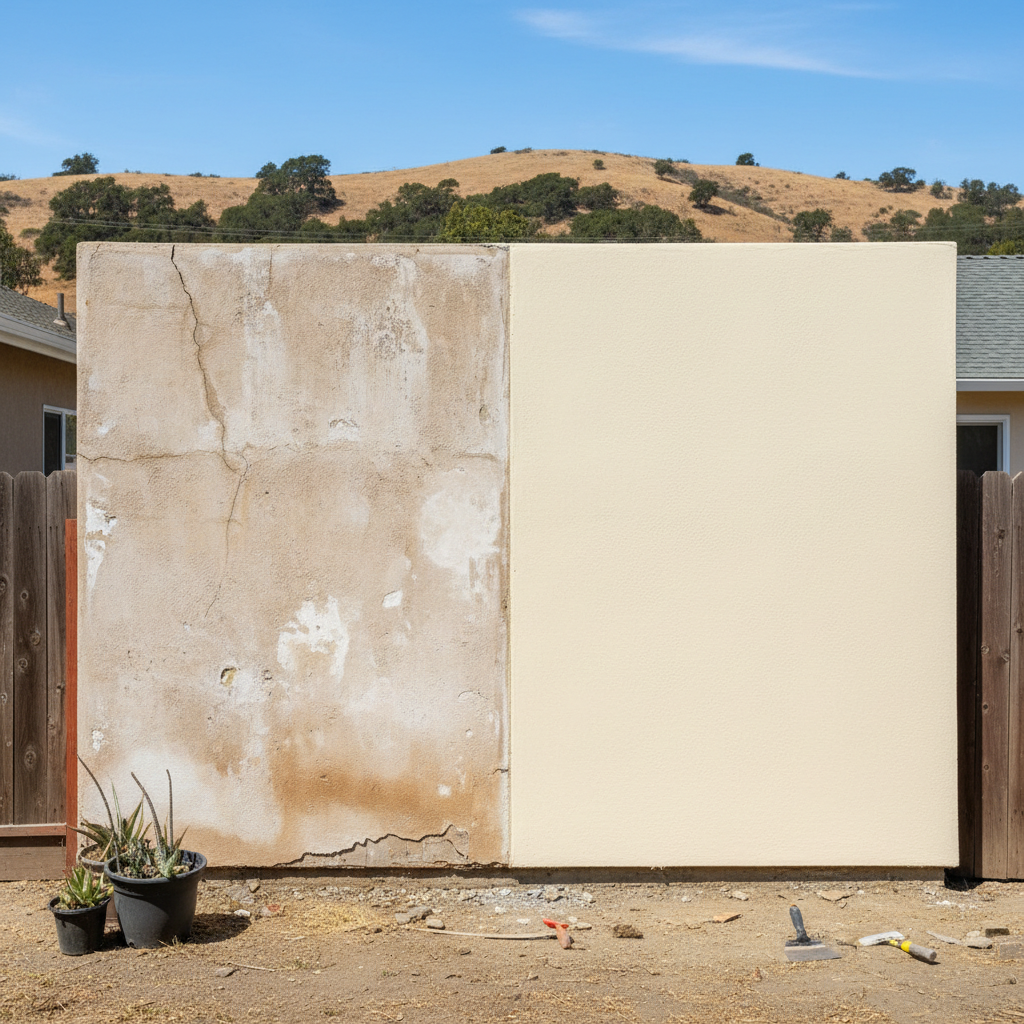
So, you're thinking about EIFS for your place here in San Bruno. Maybe you like how it looks, or you're really after that insulation value. Good call, but before you jump in, you should know there are two main ways to put EIFS on: a drained system or an undrained (sometimes called barrier) system. It's a big decision, a really important one, and you definitely don't want to mess it up.
What's the Big Deal?
Let's just start with the basics. EIFS stands for Exterior Insulation and Finish System. It's pretty much a synthetic stucco, but it's more than just a top coat. It's a whole setup that includes an insulation board (usually foam, you know, the rigid kind), a base coat with a reinforcing mesh, and then that finish coat that looks like stucco.
The main difference between drained and undrained systems? It all comes down to how they handle water. And around here, with our coastal fog and those heavy rains we get sometimes, managing water is absolutely crucial.
Undrained (Barrier) EIFS
This is the older way of doing things. With an undrained system, the EIFS itself is supposed to be the main shield against water. It goes right onto your wall sheathing, and the idea is that the EIFS layers are so tight, so impermeable, they'll just keep water out. But what if water does get past that finish coat? Maybe through a tiny crack, or a spot where something pokes through the wall and isn't sealed right, or even a window flashing that fails. If that happens, there's no easy way for the water to get back out. It just sits there, trapped between the EIFS and your wall, and that can lead to rot, mold, and serious structural damage. Not good.
Drained (Drainage) EIFS
This is the newer, much better version, and honestly, it's what you should be looking at for any new EIFS job, especially in a climate like ours. A drained system includes a drainage plane or a small air gap right behind the insulation board. This means if any water happens to sneak past the outside layers, it hits a water-resistive barrier (like house wrap), runs down that barrier, and then, crucially, exits through weep holes at the bottom of the wall. It's kind of like a rainscreen system, giving any trapped moisture a clear path to escape. Think of it as a built-in escape route for water, which is pretty clever if you ask me.
Cost: Now vs. Later
Alright, let's talk about money, because, well, that's always part of the equation, isn't it? Undrained EIFS usually has a lower upfront installation cost. It's simpler to put on, fewer parts involved, less labor. You might save a few bucks on the initial quote.
But that immediate saving? It can be a real trap. The chance of water getting in and then causing damage with an undrained system can lead to huge repair bills down the road. We're talking about tearing off sections of EIFS, replacing rotten sheathing, fixing framing, and dealing with mold remediation. Those costs can easily make any initial savings look like pocket change.
Drained EIFS costs a little more to install. You're paying for those extra materials like the drainage mat or furring strips, and for the added complexity of creating that drainage plane and making sure those weep holes are done right. But this extra cost is an investment in your home's long-term health. It's like paying a bit more for really good insurance, right?
Durability and Keeping It Up
Both systems, if they're put in correctly, stand up well to impacts and weather. The EIFS finish itself is flexible and doesn't crack as easily as traditional stucco. But when it comes to water, that's where they really differ.
An undrained system's durability completely depends on how perfect it stays. One tiny crack, or a caulk joint around a window that fails, and you've got a ticking time bomb. Keeping up an undrained system means you have to be super careful about sealing every single penetration, every joint, and fixing any cracks right away. If you miss something, you won't even know there's a problem until it's a big, expensive mess.
Drained EIFS is much more forgiving. It's built with backup plans. If a little water gets in, it gets out. You still need to maintain your EIFS, of course – keep it clean, fix any obvious damage, check your sealants – but the consequences of a small breach aren't nearly as disastrous. It's just a much tougher system for dealing with the realities of weather and, you know, owning a home.
How They Look
From the outside, you generally can't tell the difference between a drained and undrained EIFS system. The finish coat is exactly the same. You get that smooth, modern look, or a textured finish, in whatever color you pick. The good looks of EIFS – its flexibility for design, its consistent finish – are there in both types.
The only visual cue might be those weep holes at the bottom of walls or above openings in a drained system. These are usually small and discreet, easy to blend into the design, and a small price to pay for proper water management, don't you think?
My Advice for San Bruno Homes
Look, I've been doing this for a long time at Coastal Stucco Co, and I've seen it all – the good, the bad, and the truly ugly. For homeowners in San Bruno, especially with our microclimates and how moisture can just hang in the air or get blasted by the wind off the Bay, there's really only one smart choice: always go with a drained EIFS system.
The slightly higher upfront cost for a drained system is a small price to pay for the protection it gives against water damage. We see homes in areas like Portola Highlands or Mills Park, where the fog rolls in thick, and if you've got an undrained system that's compromised, you're just asking for trouble. It's not a question of if water will find its way in, but when, and then whether it can get out. A drained system gives it that escape route.
It's a more resilient, more reliable system that really does give you peace of mind. Don't cut corners on something as important as your home's exterior. Invest in a system that's built to protect your biggest asset for the long haul.